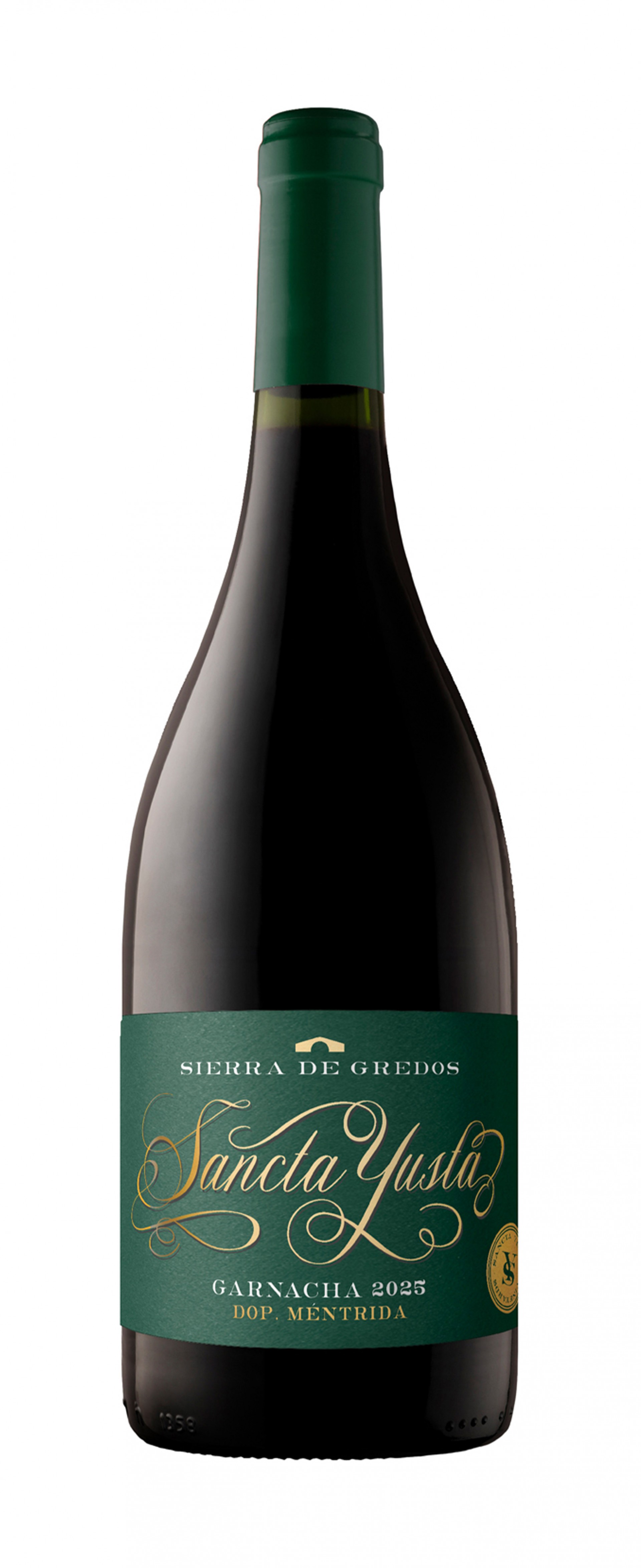
Sancta Yusta Garnacha
DO Mentrida
Red wine
The wines of the D.O.P. Méntrida originate in the north of the province of Toledo, at the meeting point between Castilla–La Mancha, Madrid and the eastern foothills of the Sierra de Gredos. This privileged location creates a transition zone between the central plateau and mountain landscapes, giving rise to vineyards with strong character, shaped by altitude, climate and soil.
Viticulture in Méntrida dates back to at least the 16th century, when its wines supplied the nearby city of Madrid and gained recognition beyond the region. During the late 19th century, Méntrida wines were already present at international trade fairs, marking an early step towards export and wider recognition. The Denominación de Origen Protegida was officially established in 1976, consolidating the historical importance of the area and preserving its viticultural identity.
The Sierra de Gredos plays a decisive role in the identity of Méntrida wines, acting as a natural barrier that moderates extreme temperatures and creates fresher conditions in the northern vineyards.
More than 80% of the vineyards are planted with Garnacha, many of them old bush vines, deeply adapted to the region’s poor, sandy soils.
Méntrida has historically been one of Madrid’s key wine suppliers, enjoying popularity from the 16th century onwards.
The D.O.P. Méntrida stands out for producing wines with a marked sense of place, combining Mediterranean intensity with continental freshness. Old vineyards, low yields and a harsh climate contribute to wines of depth, balance and authenticity. Garnacha dominates the landscape, accompanied by varieties such as Tempranillo and Syrah, offering structure and elegance to the blends.
400-800 m.
Vineyards in Méntrida are planted mainly between 400 and 600 meters above sea level, with certain northern areas near the Sierra de Gredos reaching elevations of up to 800 meters. This altitude range contributes to cooler nights, longer ripening cycles and greater aromatic definition in the wines.
Climate
The climate is extreme continental Mediterranean, with long, hot summers, very cold winters and a wide annual thermal amplitude. Rainfall is scarce, averaging 300–450 mm per year, concentrated mainly in spring and autumn. These conditions naturally limit yields and enhance grape concentration while preserving freshness.
1100–2500 vines per hectare
Vineyards are traditionally planted as low bush vines (en vaso), with planting densities ranging between 1,100 and 2,500 vines per hectare. This system favours low yields and high-quality fruit, well adapted to the region’s dry conditions and poor soils.
Thanks to a new generation of winemakers and a renewed focus on terroir, D.O.P. Méntrida has evolved from bulk production to wines of identity and quality, gaining growing national and international recognition. Today, Méntrida represents a powerful expression of Garnacha and Mediterranean landscapes, reinterpreted through modern, precise winemaking.
Méntrida is predominantly a red wine appellation, known for wines that combine ripe fruit intensity, structural depth and freshness, shaped by altitude, climate and tradition.
Please do not enter this site if you are not of legal age to buy alcohol in your access country